The Other Side of Morocco: Exploring Northern Morocco’s Medinas Before Everyone Catches On
As international travel to Morocco hits record highs, the working medinas of the north still receive less attention than the bustling souks of Marrakech.
FEZ, Morocco — We peeled off the narrow medina street into an open doorway where a man handed me a sprig of mint, motioning for me to hold it beneath my nose. I snapped the stem in half to release the oils and followed suit. He pointed up a steep, narrow stairwell, intentionally engineered centuries ago to make it easy for locals to defend their homes from intruders.
As I wound up the steps, the necessity of the mint became clear. The scent of raw animal hides baking under the North African sun grew heavier. By the time I reached the top terrace, I abandoned the mint altogether and switched strictly to mouth-breathing.
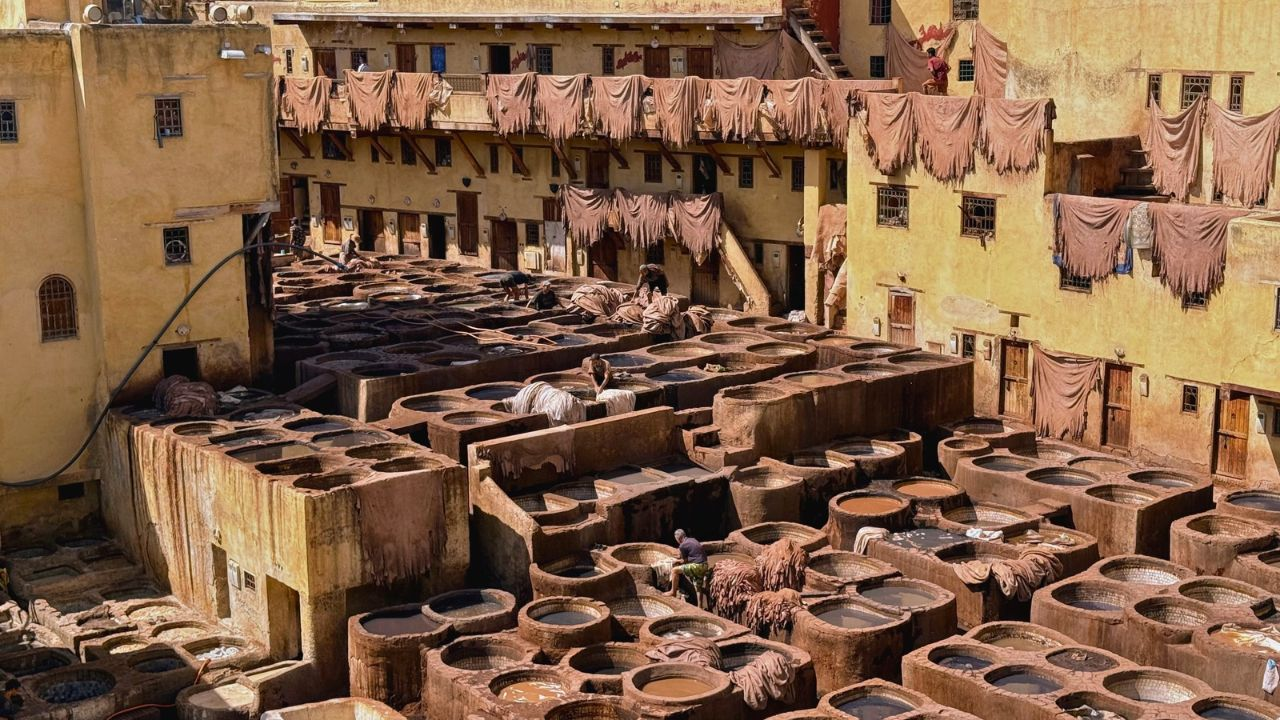
Below lay Chouara Tannery, operating on the bank of the Fez River since the 11th century. What looked from above like a post-apocalyptic grid of hot tubs was actually lime baths and dye vats filled with hides from cow, goat and camel. The pools shimmered with natural pigments: dark indigo, poppy red, cedarwood brown and yellow derived from saffron, the most expensive spice on earth.
Our guide, Hassan, pointed out a secret ingredient used in the tanning process: pigeon droppings. After lime baths help remove hair from the hides, pigeon droppings help soften them by breaking down proteins. It is a grueling craft that has made Fez a major center of leather production for centuries.
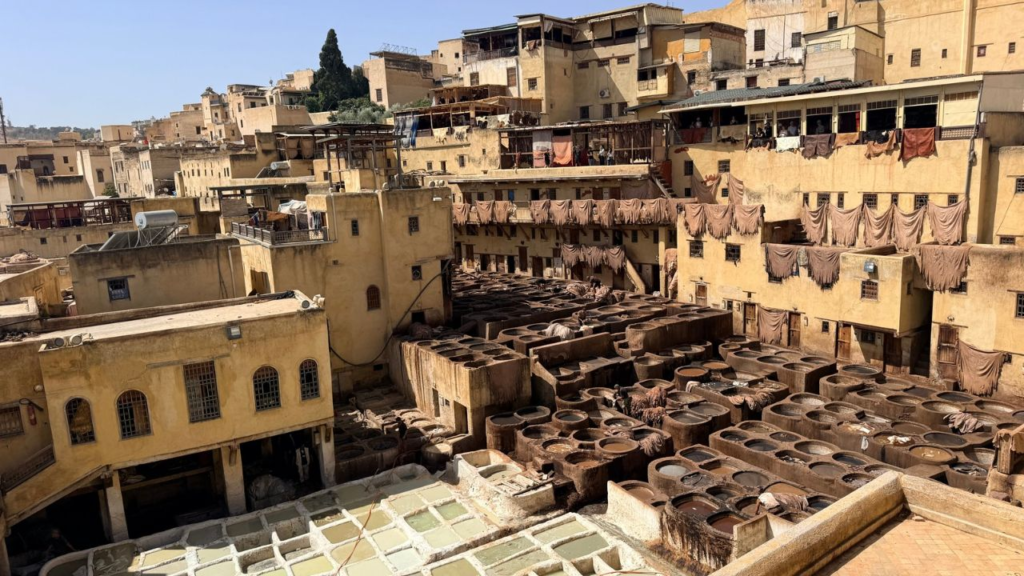
I pulled my film camera from my bag and shot two photos of the vats below, framed by clay walls draped in sun-drying hides. I had only 12 frames remaining on the roll. Though I had a full week of travel ahead, I wanted to forever save this rich, authentic Moroccan scene.
As international travel to Morocco hits record highs, the working medinas of the north still receive less attention than the bustling souks of Marrakech or the camel caravans crossing the Sahara. But with massive infrastructure investments and expanded transit routes coming to the region ahead of the 2030 World Cup, the journey north gets easier, and these areas will receive more visitation.
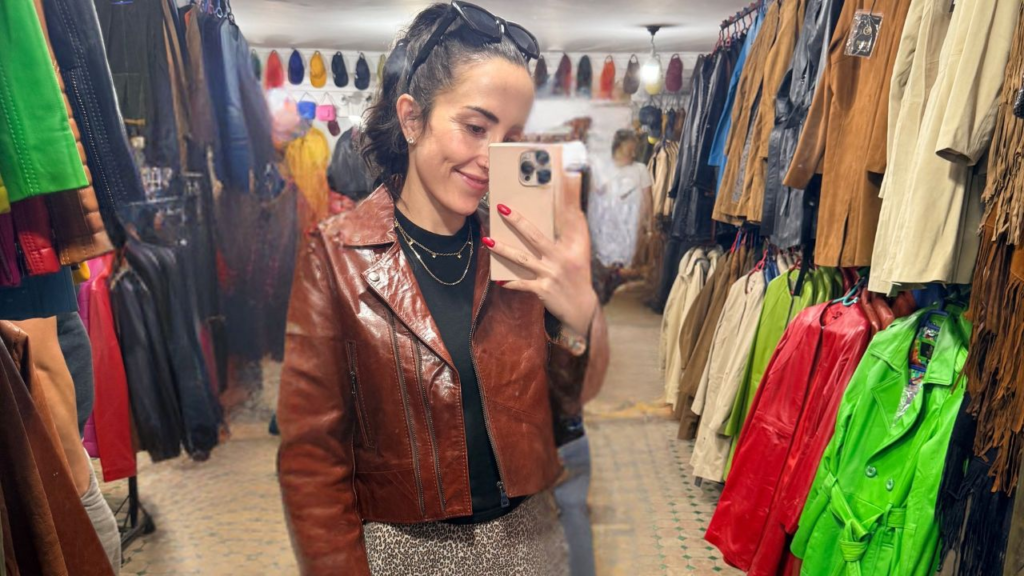
Back downstairs, I was ushered into a cooperative lined floor-to-ceiling with finished leather goods. A shopkeeper pulled a camel-suede jacket off a rack and poured his water bottle directly over it; the stream beaded and rolled off the surface. Camel belly, he explained, is naturally waterproof, remarkably soft and incredibly thin. To prove its resilience, he pulled out a lighter and held the open flame against the sleeve. The suede didn’t scorch or discolor.
I was on the final day of a seven-day tour through Northern Morocco with Exodus Adventure Travels. Up until then, I hadn’t bought anything beyond water and regional dishes—I’m generally not a souvenir person. But I walked out with the camel jacket for $210 USD, a fraction of what genuine handcrafted leather costs in Western boutiques.
I made the purchase after Hassan explained the ethical framework behind it. Traditionally, animal slaughter requires respect and zero waste; every part is utilized except the eyes and ears. Throughout my trip, I noticed people everywhere avoiding food and animal waste. Even scraps left over after meals are set on plates in the medina for the stray cats slinking between market stalls and outdoor cafes.
The North vs. Marrakech
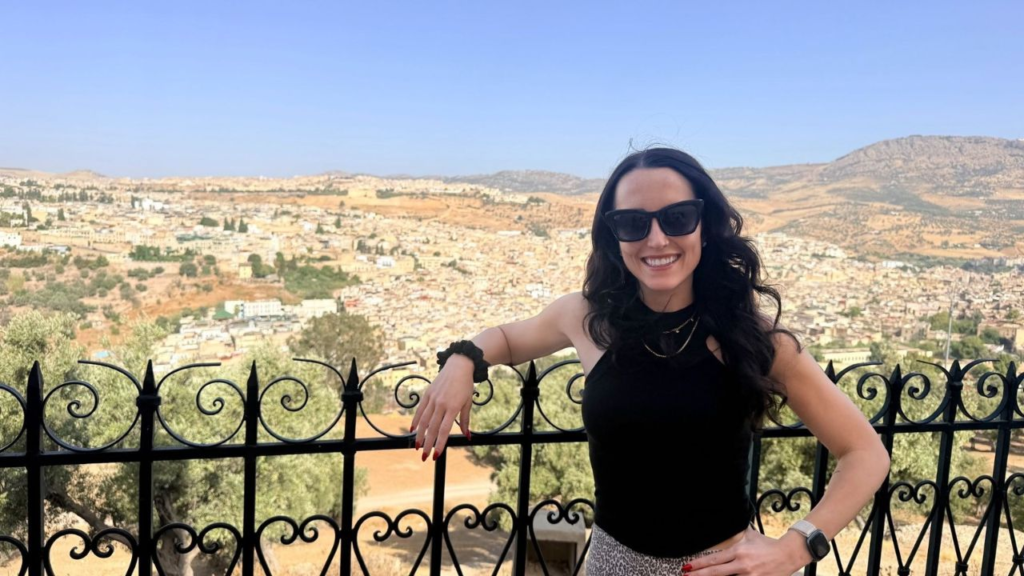
While Morocco has surged into Africa’s most-visited destination, recording 19.8 million tourist arrivals in 2025, the vast majority of international traffic remains heavily concentrated in the south.
Marrakech alone swallows nearly a third of all national hotel overnights (over 13.6 million nights in 2025), drawing massive crowds to its luxury resorts, social-media-famous riads and tour circuits. During the first 11 months of that year, Marrakech recorded 12.4 million overnight stays, compared with 1.5 million in Fez and 2.1 million in Tangier.
That stark divide in visitor density is precisely what gives Northern Morocco its unvarnished appeal. Marrakech can feel like a magnet for Western tourists, while Northern Morocco still feels, well, Moroccan.
As I stepped outside the leather co-op with my new jacket in tow, the medina absorbed us once again. Fes el-Bali, one of the world’s largest car-free urban areas, functions like a human circulatory system: narrow stone arteries splitting into veins and capillaries, carrying donkeys, wooden carts, schoolchildren, shopkeepers and travelers deeper into the ancient labyrinth.
We passed stalls laden with pointed leather babouche slippers, hand-hammered copper lamps casting intricate shadows and pyramid piles of aromatic spices. Hassan led us through a food market overflowing with cured olives and fresh butchered meats before stopping in front of Al-Qarawiyyin, the oldest continually operating university in the world. The grand entrance was framed by zellige, the traditional Moroccan art of hand-cut geometric tile mosaics carefully fitted together like complex puzzles.
A Region on the Precipice of Modernization
Our seven-day route through the north traced an extraordinary, non-traditional arc far removed from standard Sahara camel-trek itineraries. We explored Tangier, the surprisingly cutting-edge coastal gateway overlooking the Strait of Gibraltar, where European and North African history collide.
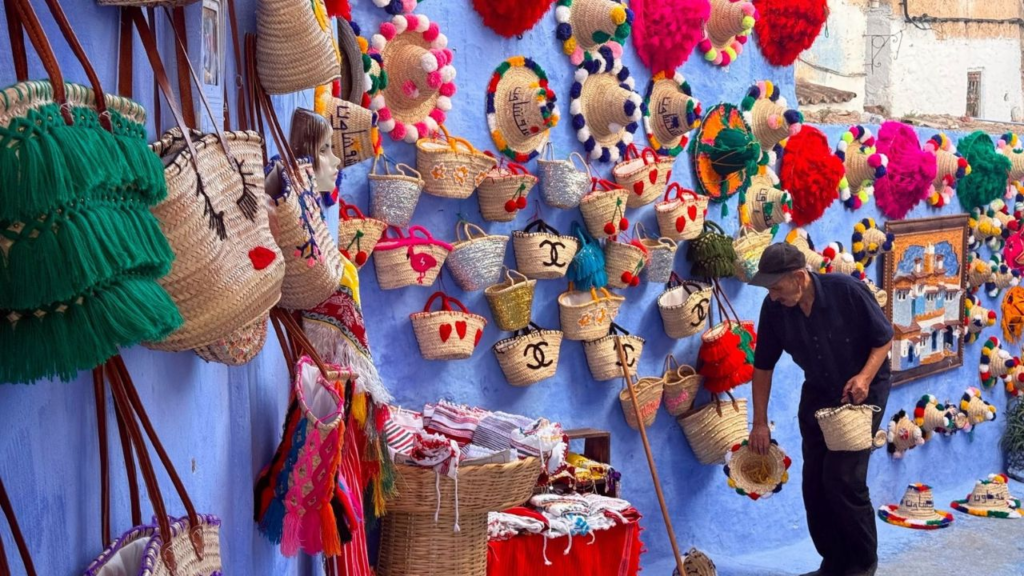
Next, we meandered the bold blue streets of Chefchaouen, as beautiful as the artisan crafts that are sold along the walkways, followed by a night under the stars in the nearby Rif mountains, a peaceful respite from the Moroccan bustle.
From Chefchaouen, we traveled to Fez, the country’s spiritual and craft capital, where medieval trade techniques have survived centuries of global industrialization. Exodus Travels paired us with Aman, a young Moroccan guide who stayed with us throughout the trip. Even as someone accustomed to solo travel, I never could have navigated Northern Morocco without a guide.
As Morocco prepares to co-host the 2030 FIFA World Cup, billions of dollars are flowing into transformative infrastructure: expanding the high-speed Al Boraq rail line, modernizing regional airports in Tangier and Fez, and building new highways that connect the north with Casablanca and Marrakech. It’s an exciting era of progress for the nation, promising easier travel and new economic opportunities.
Yet for travelers, there is something irreplaceable about experiencing Northern Morocco right now. As transit links grow and international flights into Tangier and Fez expand, these working medinas will naturally see more visitors. And standing on that high terrace above centuries-old dye vats, watching tanners work knee-deep in indigo and saffron precisely as their ancestors did, I felt deeply grateful to witness this side of the country now, peering through an unobstructed window into the authentic, beautiful Moroccan culture.
Northern Morocco Essentials
- How to Travel: Exodus Adventure Travels offers small-group guided itineraries built on responsible cultural immersion across Northern Morocco.
- Getting Around: The Al Boraq high-speed train connects Tangier to Casablanca in just over two hours. For reaching Chefchaouen in the Rif Mountains or navigating the 9,000 car-free alleys of Fes el-Bali, booking a licensed local guide is essential. Do not explore them alone.
- Artisan Etiquette: When visiting tanneries or artisan co-ops, remember these are active workplaces. Purchasing goods directly from the makers or tipping your host supports the local craft economy directly.