For a Few Nights Each Fall, Oaxaca Welcomes Its Dead Home
During Día de Muertos in Oaxaca, these offerings fill home altars and accompany visits to family graves. A favorite dish, a glass of something familiar and a photograph help welcome relatives whose absence is felt throughout the year.
A small painted face peeks from a golden loaf of pan de muerto, the bread placed on Oaxacan altars to welcome loved ones home. It rests among flowers, candles and photographs. Nearby, a plate of food waits for someone who will never pull up a chair.
During Día de Muertos in Oaxaca, these offerings fill home altars and accompany visits to family graves. A favorite dish, a glass of something familiar and a photograph help welcome relatives whose absence is felt throughout the year. Families cook for them, decorate their graves and gather to share stories about their lives.
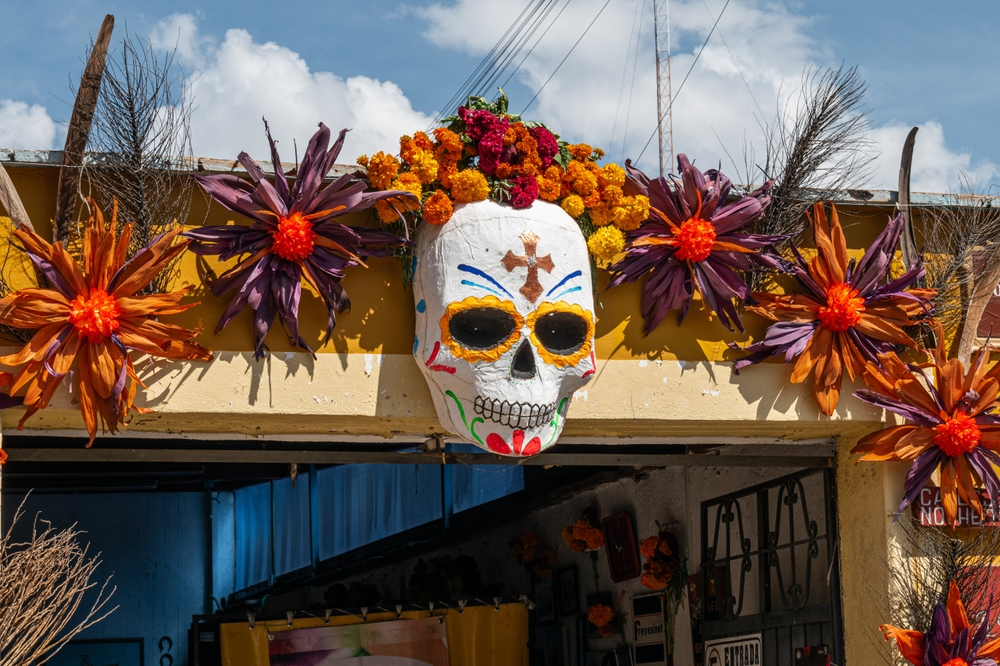
By late October, families across Oaxaca City and the surrounding valleys are shopping for bread, candles and flowers. Altars are taking shape as marigolds and candlelight adorn cemeteries and front porches.
Making Time For The Dead
Día de Muertos welcomes deceased loved ones home for a brief annual visit. Its roots lie in Indigenous traditions of honoring ancestors, which became intertwined with Catholic observances after the Spanish conquest. Celebrated around All Saints’ Day and All Souls’ Day on November 1 and 2, the holiday brings families together to prepare offerings, visit graves and remember the people they have lost. Customs vary across Mexico, and within Oaxaca itself.
The altars, called ofrendas, are prepared for those returning relatives. Photographs identify the people being remembered, while favorite foods and drinks await their arrival. A dish of mole or a cup of chocolate carries a personal connection: the family has prepared something their loved one enjoyed in life. These offerings express the belief that a relationship continues after death, with the living still responsible for welcoming and caring for their dead.
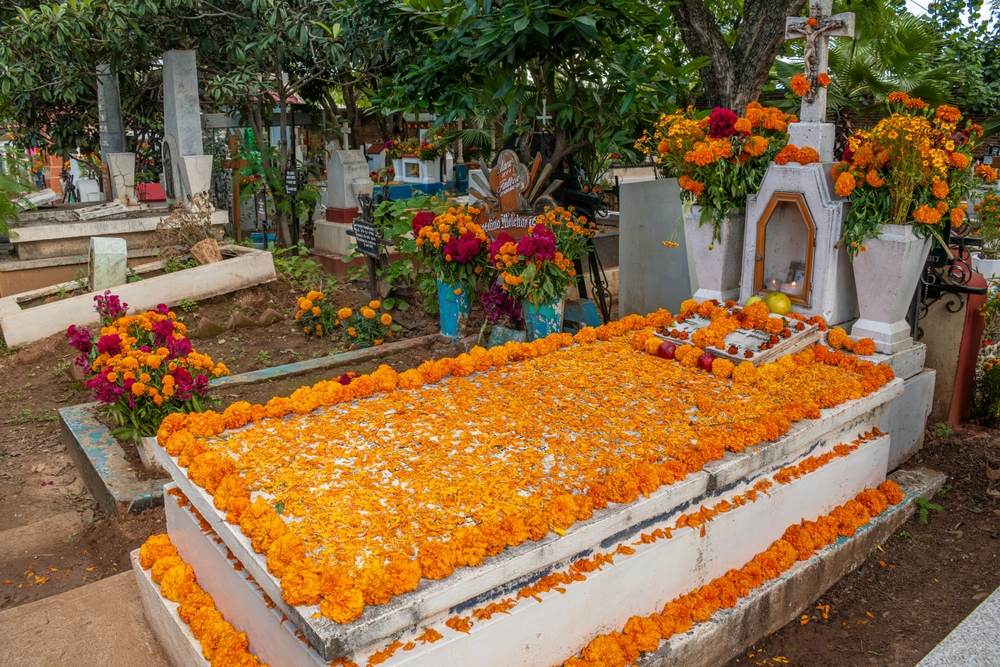
Marigolds, known as cempasúchil, help guide the spirits home with their vivid color and strong fragrance. Their petals may be scattered in paths leading toward an altar, while candles light the way. Together, the flowers, food and candlelight prepare a home for the return of someone deeply missed. Families may also clean and decorate graves and spend time in the cemetery, sharing memories and keeping their relatives company.
Oaxaca in the Days of the Returning Dead
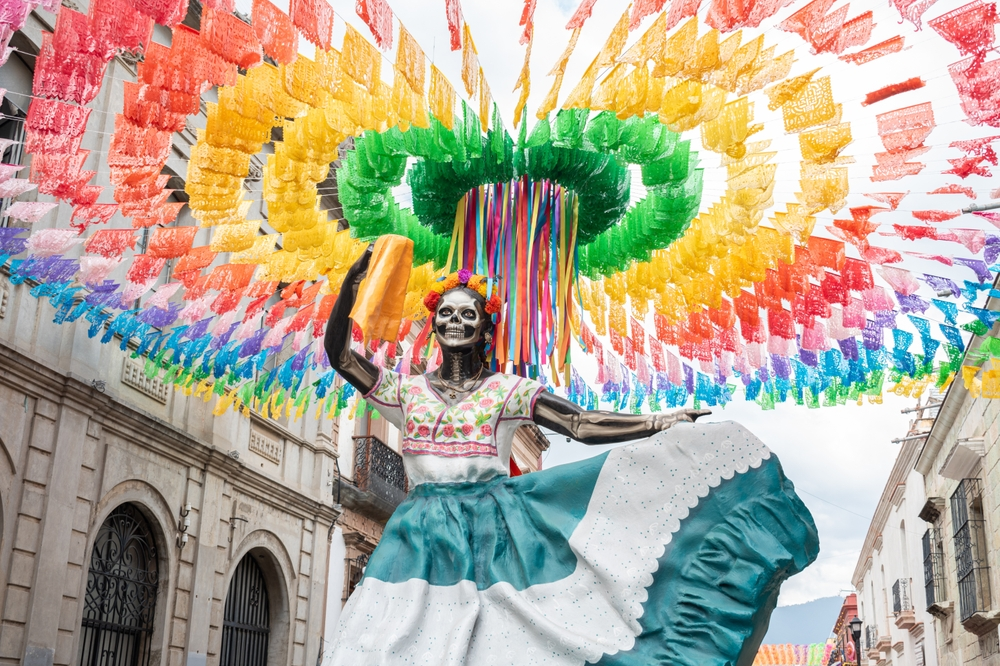
In Oaxaca, Día de Muertos unfolds across the city and the surrounding villages, each with its own ways of welcoming the dead. The region’s Indigenous communities, including Zapotec and Mixtec peoples, have shaped traditions that vary from the food placed on an altar to the music played beside a grave. Staying in Oaxaca City gives visitors a base for experiencing several of these celebrations, with markets, public altar displays and street processions close by, and village observances a drive beyond the center.
In the moment
Experience it
Tour of comparsas in Etla Oaxaca
Follow the brass bands and masked dancers through the streets of Etla on a guided tour of its Día de Muertos celebrations. Book this evening outing from Oaxaca City to learn the stories behind the costumes and community traditions
The days leading into November are part of the experience. Market stalls fill with orange cempasúchil, candles and bread as families shop for their offerings. At Mercado de Benito Juárez and neighboring Mercado 20 de Noviembre, visitors can stop for chocolate and pan de yema between browsing the stalls. The bread appears again on altars, where its small decorative faces give it a distinctly Oaxacan appearance. Outside, elaborate sand carpets cover sections of pavement, their colored patterns laid carefully across ground that will soon be cleared again.
As evening approaches, music draws people into the streets. Comparsas move through neighborhoods with brass bands, dancers and costumed participants, bringing a boisterous public celebration alongside the observances taking place in homes. Visitors can watch from the roadside or follow where participation is welcomed, leaving room for musicians and residents to pass. Beyond the city, communities in the Etla valley hold muerteadas with their own costumes, performances and local customs; dates and arrangements should be checked with a local guide before setting out.
An evening in the cemetery brings visitors closer to the family observance at the heart of the holiday. In Santa Cruz Xoxocotlán and Santa María Atzompa, candles illuminate graves covered in flowers as relatives gather nearby. Conversation and music may carry between the rows while families settle in to spend time with their dead. These gatherings take place on community schedules, so choosing the right night matters more than arriving on November 1 simply because it is the date marked on a travel calendar.
For a visitor, the change between a crowded procession and a family gathered around a grave can be striking. Both belong to the celebration. A locally based guide can explain the customs and help establish where visitors are welcome, but families decide whether to invite conversation or photographs. Allowing an evening to unfold slowly, with time to listen and observe, offers a fuller experience than trying to fit several cemeteries and a procession into the same night.
A Few Nights Only
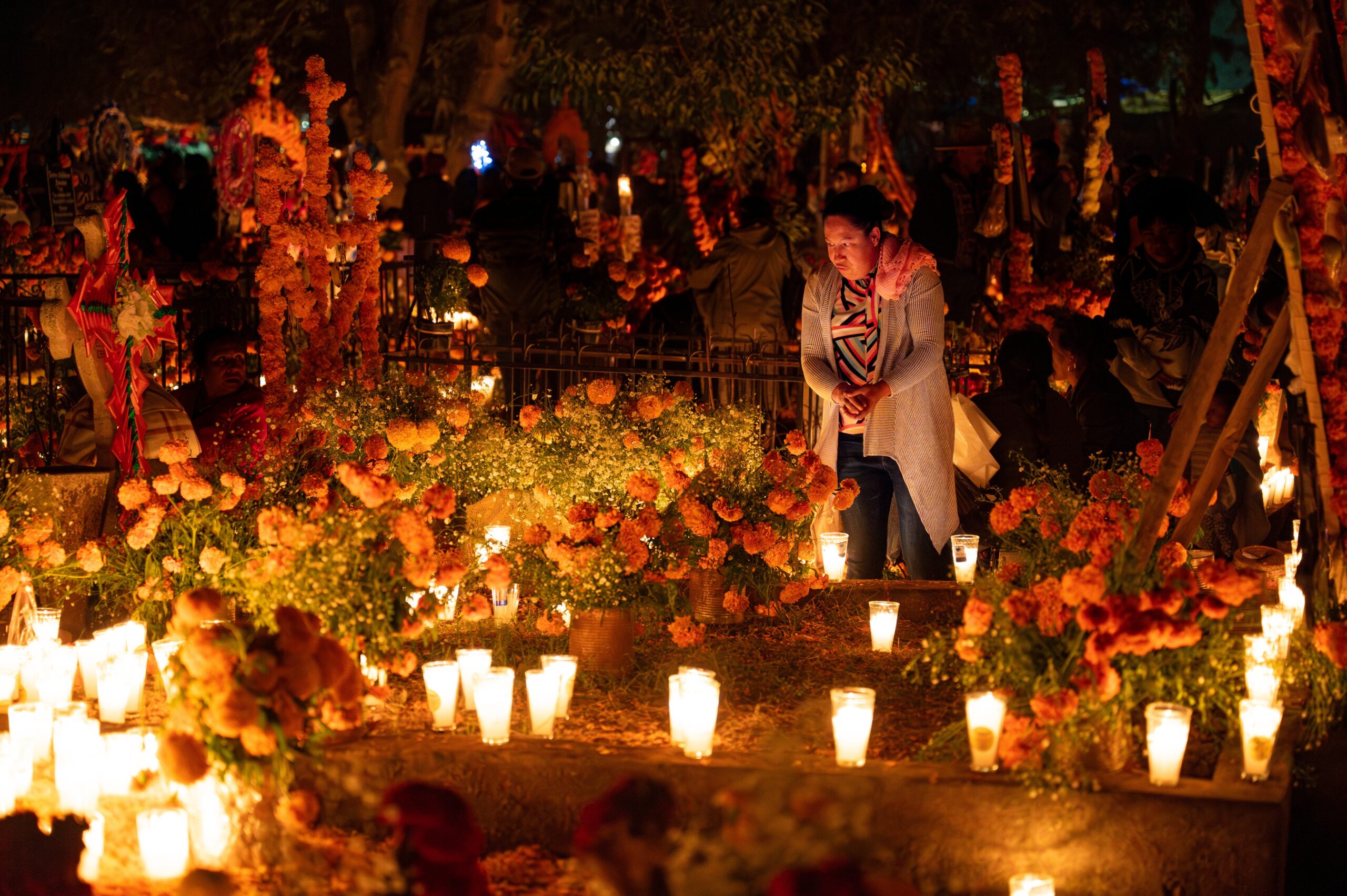
For a few nights each fall, visitors to Oaxaca can see how families make room for the people they have lost. That welcome takes different forms across the city and surrounding villages, from music-filled streets to hours spent beside a candlelit grave. Understanding what is being celebrated gives those experiences their meaning: the flowers mark a way home, the candles guide the journey, and the meal on the altar has been prepared for someone who is still part of the family.
While You’re here
Editors’ favorites in the area
Eat Here
Las Quince Letras: Chef Celia Florián’s restaurant focuses on traditional Oaxacan cooking. Go for the mole or garnachas istmeñas, crisp masa rounds topped with shredded beef and pickled cabbage.
Stay Here
Nana Vida Hotel Oaxaca:
NaNa Vida Hotel Oaxaca features a garden, restaurant and bar in the center of Oaxaca City. This 4-star hotel offers a 24-hour front desk, a business center and free WiFi. The hotel has family rooms.
Quinta Real Oaxaca:
Stay inside the restored 16th-century Convent of Santa Catalina de Siena, close to Santo Domingo and the historic center. A good choice for readers who want their accommodation to be part of the city’s history.
Play Here
Monte Albán: Spend a morning exploring the plazas, carved stones and monumental buildings of the ancient Zapotec capital, set on a mountaintop above the valley.
Museo de las Culturas de Oaxaca: Inside the former Santo Domingo convent, the museum offers a deeper introduction to the region’s history. Pair it with Monte Albán, or choose it for a day spent within the city.