September Is Whale Season in Hermanus, South Africa
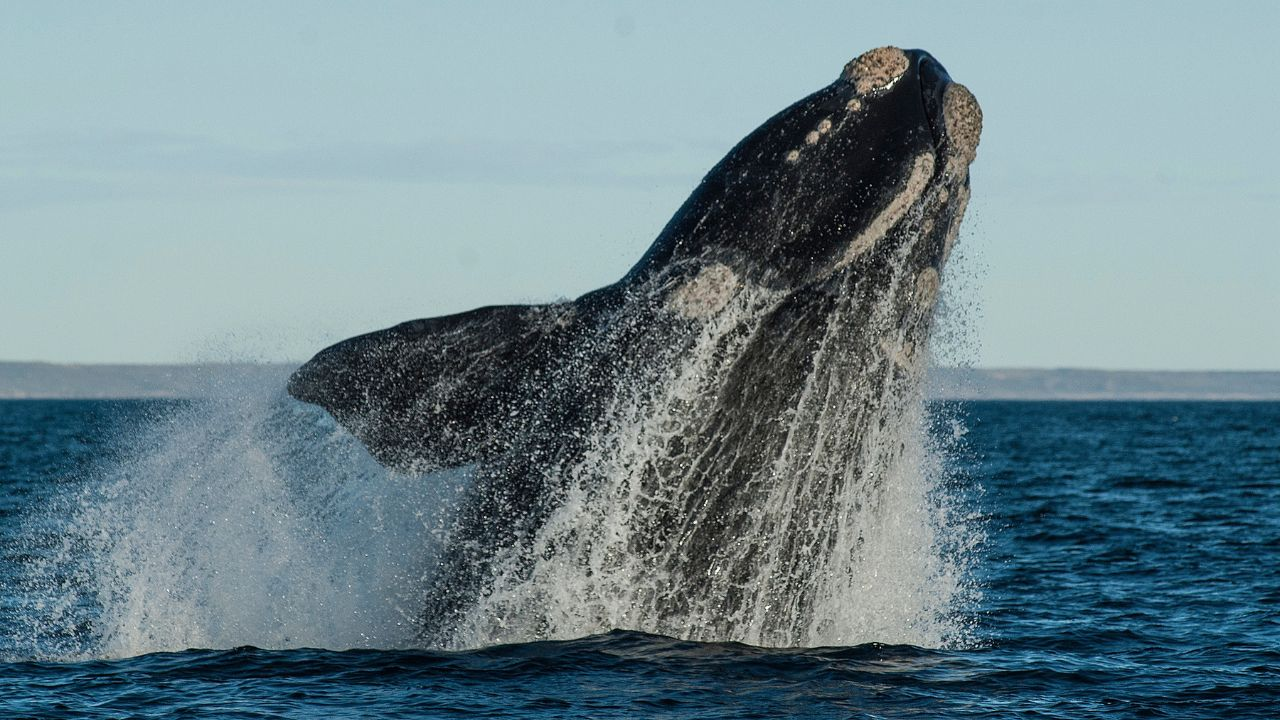
From the cliffs above Walker Bay, it can take a minute to realize that the dark shape in the water isn’t a rock. A broad back breaks the surface, followed by a puff of mist. Sometimes a tail rises behind it, and if you’re lucky, the body of a whale comes out of the water, briefly suspended above the waves before crashing back into the bay.
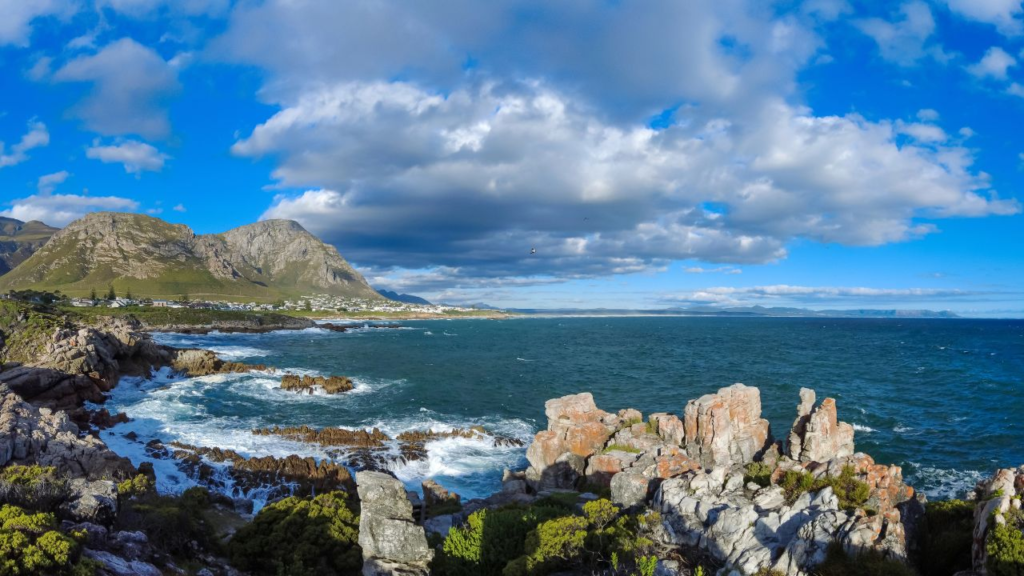
This is September in Hermanus, a small coastal town in South Africa’s Western Cape and one of the few places in the world where some of the best whale watching happens without ever stepping onto a boat.
Each year, southern right whales leave their feeding grounds in the Southern Ocean and travel north to the protected waters along South Africa’s coast. They begin arriving around June to mate, give birth, and nurse their calves, remaining along the coast into spring.
Hermanus sits above Walker Bay, one of the areas where mothers and calves regularly gather, and by September, whale season is well underway.
Why September?
Whale season in Hermanus stretches from roughly June through November, but September is one of the most reliable windows for viewing. Hermanus Tourism notes that sightings can vary during July and August, while whales are seen with much greater consistency in September, October and November.
September also catches the tail end of the southern right whale calving season, which runs from late June through late October and peaks in August. By September, many mothers are already in the protected coastal waters with young calves beside them.
These aren’t whales simply passing Hermanus on a long migration. Walker Bay is part of their breeding and nursery grounds, and southern right whales tend to remain relatively close to shore while they are here. Mothers nurse their calves in these protected waters before eventually beginning the long journey back toward Antarctic feeding grounds.
Follow the Sound of the Kelp Horn
While visiting Hermanus to whale watch, you’ll be treated to an unusual practice you can’t experience anywhere else.
During whale season, the town’s official Whale Crier patrols the waterfront and Cliff Path carrying a horn made from dried kelp. When whales are spotted in Walker Bay, he sounds it, alerting anyone within earshot that it’s time to look toward the water.
The tradition started in 1991, when a visitor reportedly walked into the local tourism office after seeing the whales and declared that they must be the Cape’s “best-kept secret.” Local tourism manager Jim Wepener decided Hermanus needed a way to announce its whales and began developing the idea of a town crier whose sole job would be to spread the news when one appeared.
By August 1992, Pieter Claasen, an employee of the Old Harbor, had become Hermanus’s first official Whale Crier. Instead of ringing a bell, he blew a kelp horn. The tradition stuck, and more than three decades later, the Whale Crier remains one of the town’s most recognizable characters.
The horn isn’t just ceremonial. A Morse code-like system of calls has traditionally indicated where whales have been spotted, allowing visitors to head toward the right stretch of coastline. The Whale Crier’s sandwich board helps visitors interpret the calls and determine where to look.
It makes Whale watching here feel less like an excursion and more like something the entire town is participating in. You can be eating lunch, wandering near the Old Harbor, or walking along the cliffs when the low call of the kelp horn carries down the waterfront and sends everyone’s attention back toward Walker Bay.
How to See the Whales
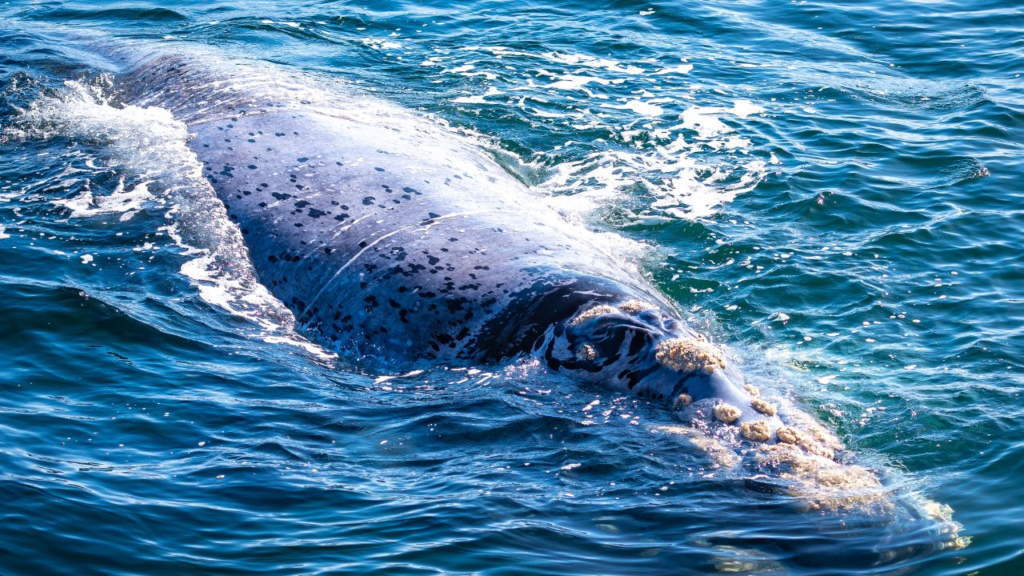
Its best to whale watch from shore here. The Hermanus Cliff Path follows the coastline for roughly 12 kilometers, linking viewpoints above Walker Bay and giving visitors plenty of opportunities to stop and scan the water.
Gearing’s Point near the Old Harbor is one of the easiest places to begin, particularly if you’re staying in central Hermanus. From there, follow the path east toward Sievers Point, Kwaaiwater and Voëlklip, stopping at the overlooks along the way. Whales sometimes come surprisingly close to shore, so binoculars are useful but aren’t always necessary.
The next perspective is from the water. Licensed whale-watching boats operate in Walker Bay during the season, giving visitors the chance to see southern right whales closer to sea level. Humpback whales, Bryde’s whales, dolphins, Cape fur seals and seabirds may also be seen on your tour.
A boat trip isn’t necessarily better than watching from shore, which is part of what makes Hermanus unusual. From the cliffs, you can follow whales as they move through the bay and watch mothers traveling slowly with calves beside them. From a boat, the scale changes completely as an animal that can weigh tens of thousands of pounds surfaces at eye level. If time and weather allow, experiencing both gives you two very different views of the same migration.
For something more active, guided sea kayaking trips also operate in Walker Bay. Kayakers aren’t permitted to chase or approach the whales, but paddling the same coastline while southern right whales are occupying the bay puts you directly into the landscape that brings them here each year.
What to Expect
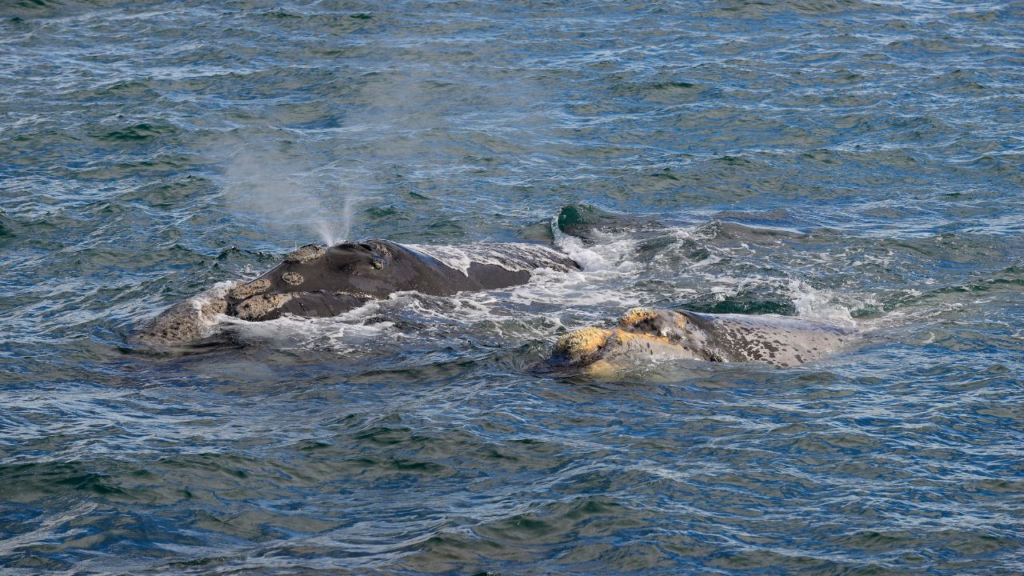
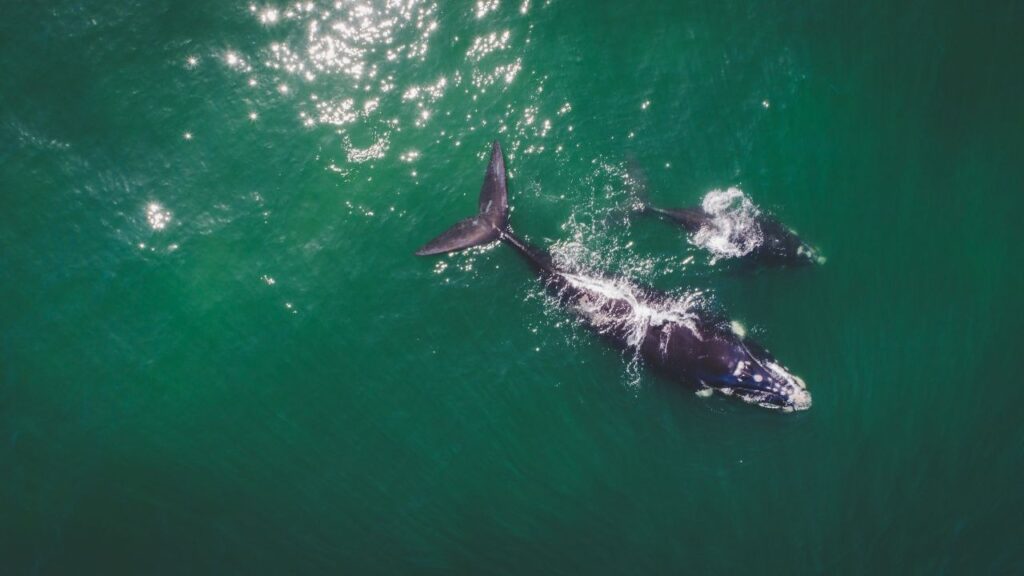
Southern right whales are recognizable by their broad backs, lack of a dorsal fin, and the rough patches of skin, called callosities, on their heads. When they surface to breathe, their two blowholes produce a distinctive V-shaped blow.
What they’ll actually do once you’ve found them is impossible to predict. A whale may surface several times quietly before disappearing, while another might slap its tail, roll at the surface, or launch its body almost completely out of the water in a breach.
Weather is equally unpredictable. September is early spring in the Western Cape, and conditions can shift quickly along the coast. Boat departures depend on sea conditions and may be canceled, which is another reason Hermanus works so well for Whale watching. Even when the water is too rough for boats, miles of coastline remain accessible from land.
Give yourself more than one day if whales are the reason for your trip. Wildlife and weather don’t work around travel schedules, and having a few mornings or afternoons to walk the cliffs gives you a much better chance of catching Walker Bay on a good day.
Where to Stay
Central Hermanus and the Old Harbor make the most sense for a first visit, particularly if you want to explore without constantly getting in a car. Restaurants and shops are nearby, Gearing’s Point is within easy reach, and you can step onto the Cliff Path and begin looking for whales almost immediately.
Westcliff sits between central Hermanus and the New Harbor and is a good option if a boat-based whale-watching trip is high on your list. Its quieter than the center while keeping both the harbor and coastal viewpoints close.
Eastcliff is another good middle ground. The neighborhood is residential and close to central Hermanus, with easy access to sections of the Cliff Path.
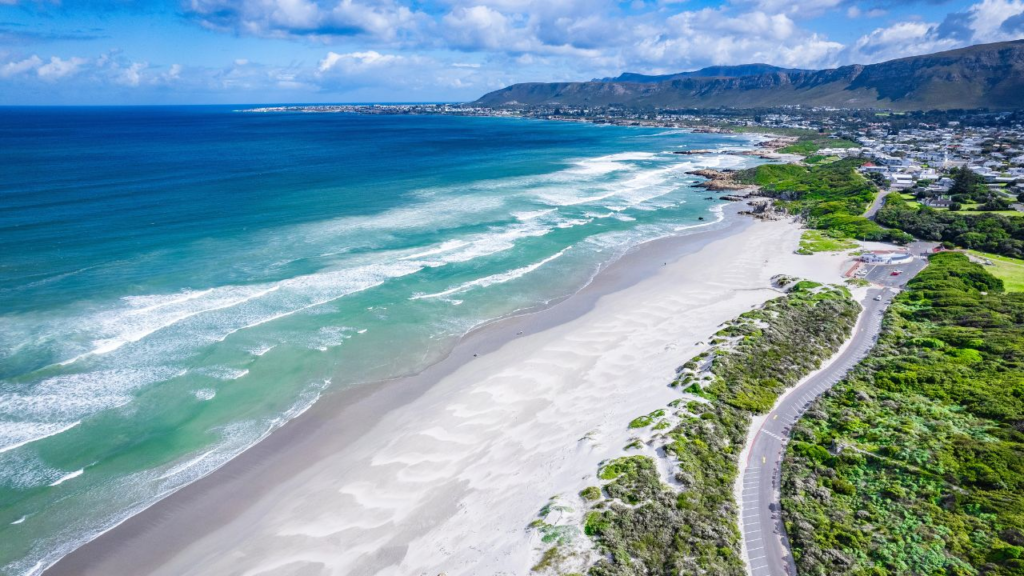
Farther east, Voëlklip works well for travelers who want beaches and coastal scenery to be as much a part of the trip as whale watching. Grotto Beach is nearby, along with additional places to watch Walker Bay from shore.
Across the bay, De Kelders has dramatic limestone cliffs overlooking Walker Bay and excellent land-based Whale watching, but without the activity of central Hermanus. It’s better suited to travelers who want a quieter coastal stay and don’t mind driving into Hermanus.
While It Lasts
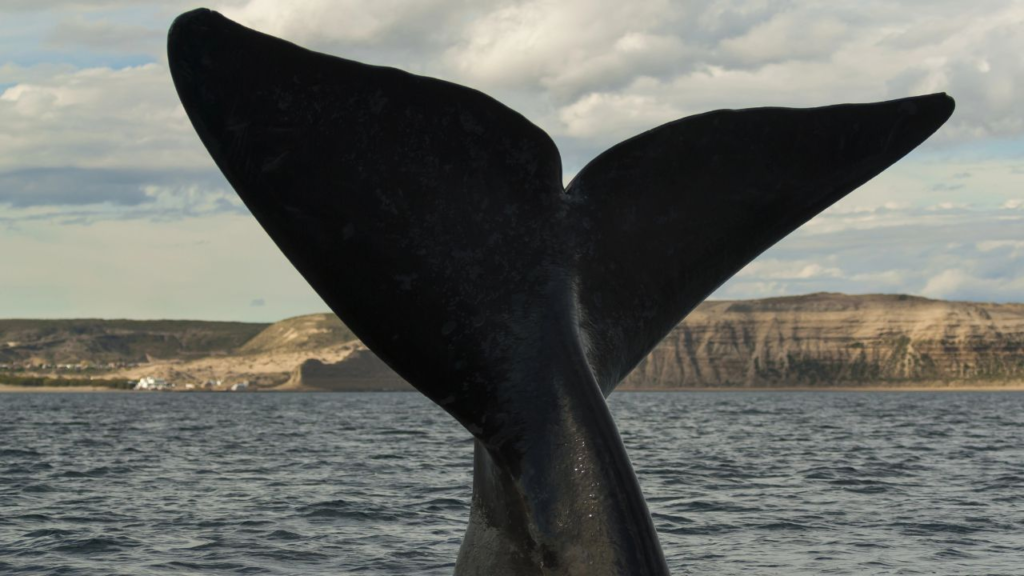
Southern right whales won’t stay in Walker Bay forever. As spring progresses, mothers and their growing calves begin to leave the South African coast and make their way back toward richer feeding grounds farther south.
Researchers are also finding that the timing is changing. Females are calving less frequently than they once did, and some mothers appear to be leaving South Africa’s breeding grounds earlier as reduced body condition makes the long period of nursing more difficult.
For now, September still brings that remarkable convergence to Hermanus.
Come a few months later, and the bay will still be beautiful. The whales, however, will be somewhere else.