Catch the Pacific Northwest Coast at Its Wildest During Winter King Tides
Winter’s highest tides can send water over seawalls and swallow whole stretches of beach. Here’s when to go and where to watch from Oregon to Vancouver Island.
It’s rainy and cold, the skies are gray and angry, I can hear the intense crashing of waves against rocks from a block away. As a typical resident of the Pacific Northwest, I have no umbrella, but I do have good rain gear to keep me dry. This is the perfect time to go to the beach.
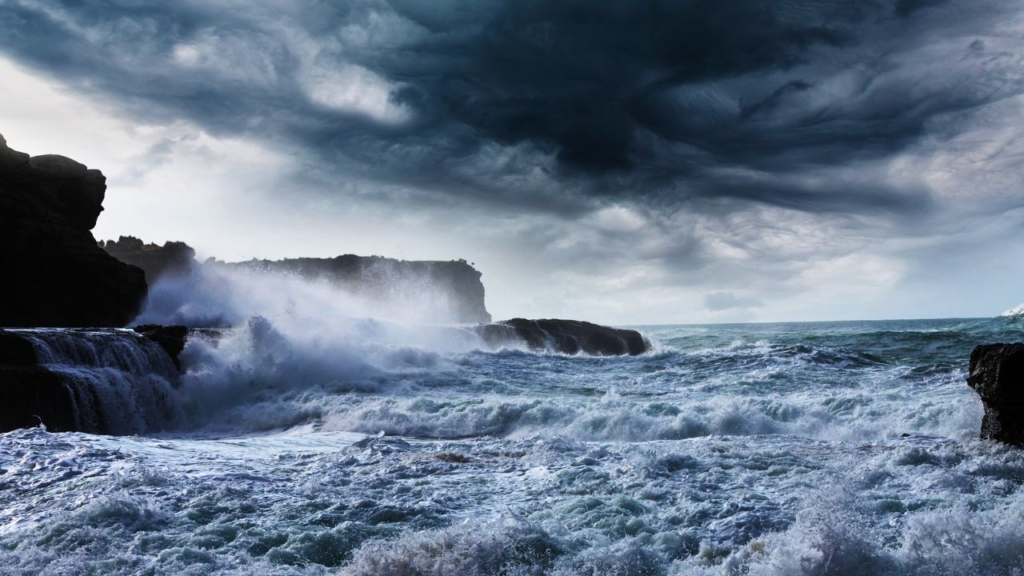
I’m at Shore Acres State Park near Coos Bay, Oregon. I’m not alone, I’m joined by dozens of fellow onlookers. Each of us peer out through our tightened hoods as we lean into the rain. A swell rolls in and hits the sandstone cliffs with a boom loud enough to swallow the sound of the crowd. You can see a few mouths gasping open in awe, but no sound accompanies the movement. Spray flies above the bluff, and for a moment there’s more white than gray. Then the water pours back down the rock and everyone waits for the next one.
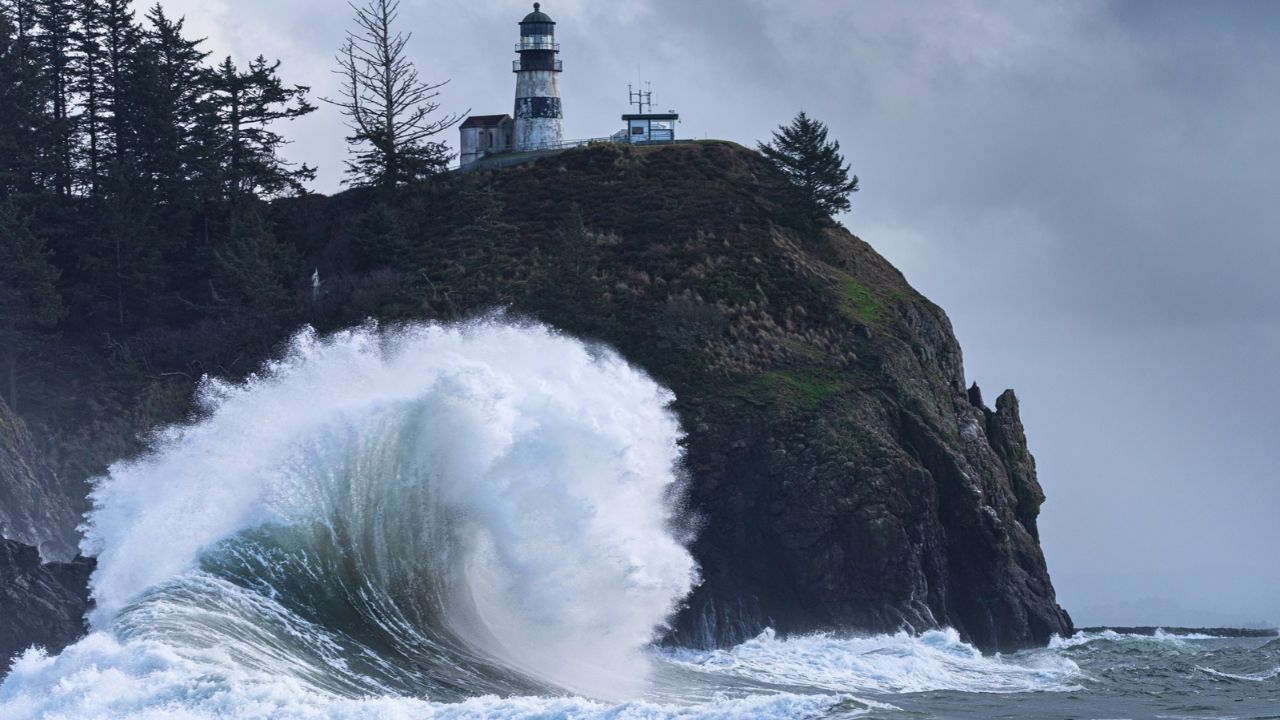
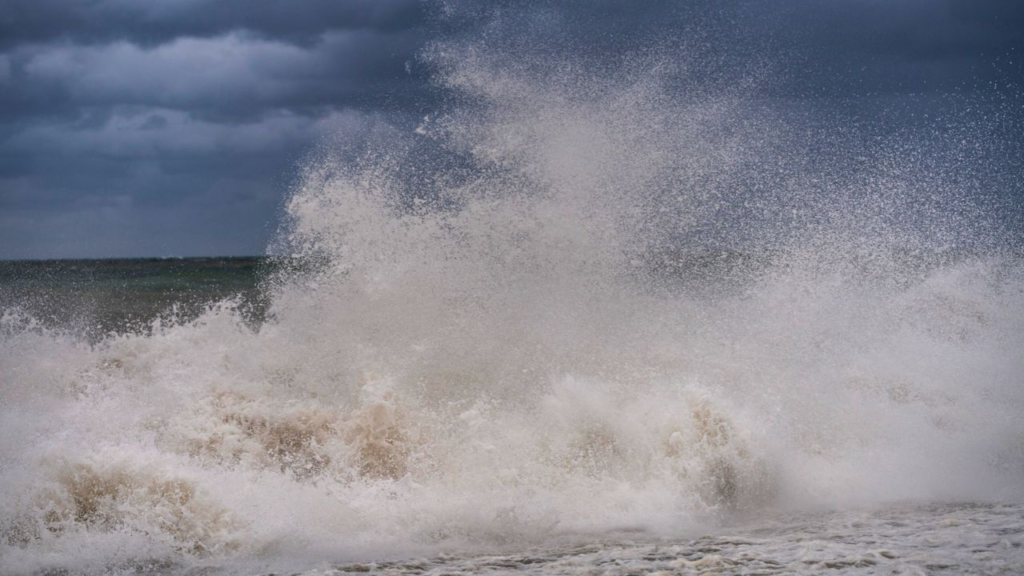
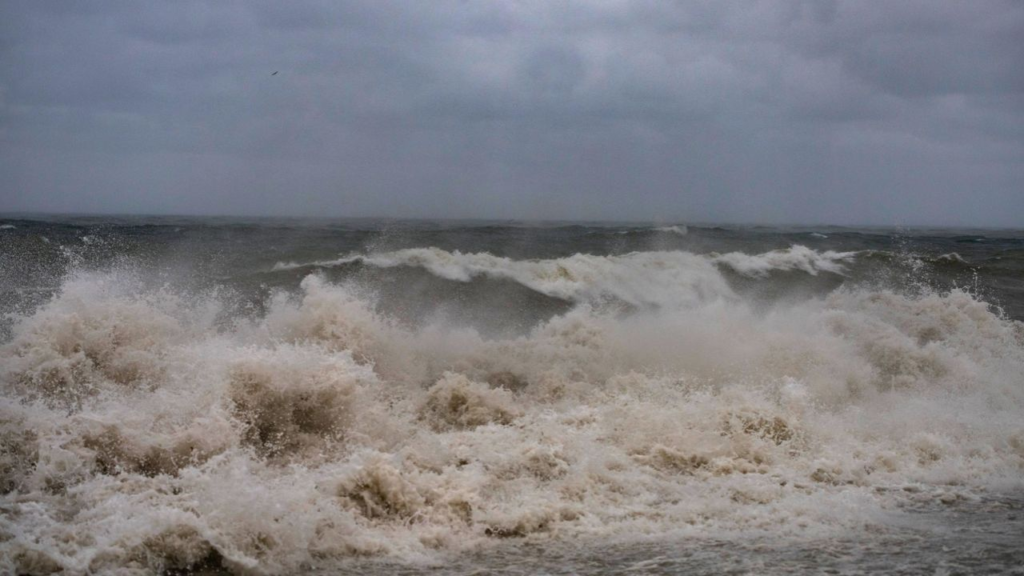
When a winter swell arrives on one of the highest tides of the year, thick white foam bubbles over rocks, covers the sandy beaches, spills over seawalls and floods the steps could walk down an hour earlier. In particularly rough conditions, breakers along parts of the Oregon and southwest Washington coasts can reach 35 feet. King tides happen on coastlines around the world, but in my (possibly biased) opinion, the Pacific Northwest puts on one of the best shows.
What is a king tide?
A king tide is one of the highest predictable tides of the year. Around a new or full moon, the sun, moon, and Earth line up, and the pull of the sun and moon produces higher high tides and lower low tides. This happens about twice a month.
When that alignment also falls near the point in the moon’s orbit when it’s closest to Earth, the moon’s pull is stronger and the difference between high and low tide can grow even wider. That’s called a perigean spring tide scientifically, or a king tide commonly.
When is king tide?
For the 2026–27 winter season, the Pacific North West king tide windows are November 23–27, December 22–26, and January 20–24.
Pick a daylight high tide, then check the surf forecast. If you’re going for the cliff-crashing waves, pay attention to the swell as well as the tide. If you’re going to see how far the water comes inland, pick a spot with something familiar in view, like beach stairs or a seawall.
Where to watch the king tides in the Pacific Northwest
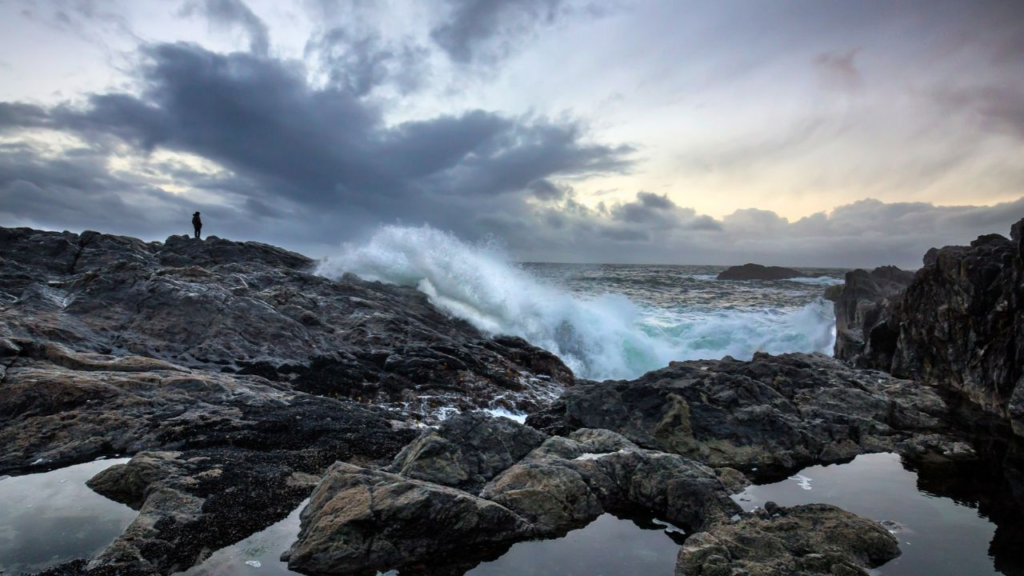
Shore Acres State Park, Oregon. If you’re after the sight and sound of waves slamming into rock, start here. The park’s observation shelter looks out over the sandstone cliffs. After the big hit, watch the water stream back down the face of the bluff.
Cannon Beach, Oregon. Haystack Rock gives you a fixed point to watch as the sand around it disappears under a sheet of foam. Take it in from a dry, elevated viewpoint. Save the walk out to the rock and its tidepools for a safe low tide.
Cape Disappointment, Washington. At the mouth of the Columbia River, the cliffs above Waikiki Beach give the incoming surf something solid to hit. Look for an open, elevated park viewpoint and check access before you go. When the surf is running high, stay off the beach and the rocks below.
Ocean Shores, Washington. Here the scale comes from how far the water can travel across a wide, flat beach. Watch from a dry spot well back from the surf, with a clear route inland. Skip the North Jetty rocks in heavy surf and heed the closure at Damon Point. While driving on the beach at Ocean Shores is a popular activity, king tides are absolutely not the time for this.
Westport, Washington. Start at the observation tower by the marina. It gives you a view over the harbor entrance and a place to watch the water from above. Leave the jetty rocks to the waves.
Tofino and Pacific Rim National Park Reserve, British Columbia. From the Kwisitis Visitor Centre observation deck at Wickaninnish Beach, watch the surf spread across the sand below the coastal rainforest. Parks Canada also recommends Florencia Bay Lookout for storm watching.
King tide safety
Watch from an open, elevated viewpoint and stay behind barriers. A sneaker wave can run much farther up the beach than the last several waves, and a surge can roll driftwood that looks firmly wedged in the sand.
Keep clear of jetties, wet rocks, and bluff edges. If water is already running over steps, a path, or a parking area, move to higher ground.
A tide table tells you when to look for high water. Check local surf warnings and closures to decide where you can do that safely. Below are resources to help you safely plan a trip to view the PNW king tides.